What Is Regulatory Intelligence?

A regulator issues new guidance on outsourcing risk in one market, updates AML expectations in another, and signals enforcement priorities through a speech that never appears in a formal rulebook. Your business still has to respond – quickly, defensibly, and across jurisdictions. That is why the question what is regulatory intelligence matters far beyond compliance theory.
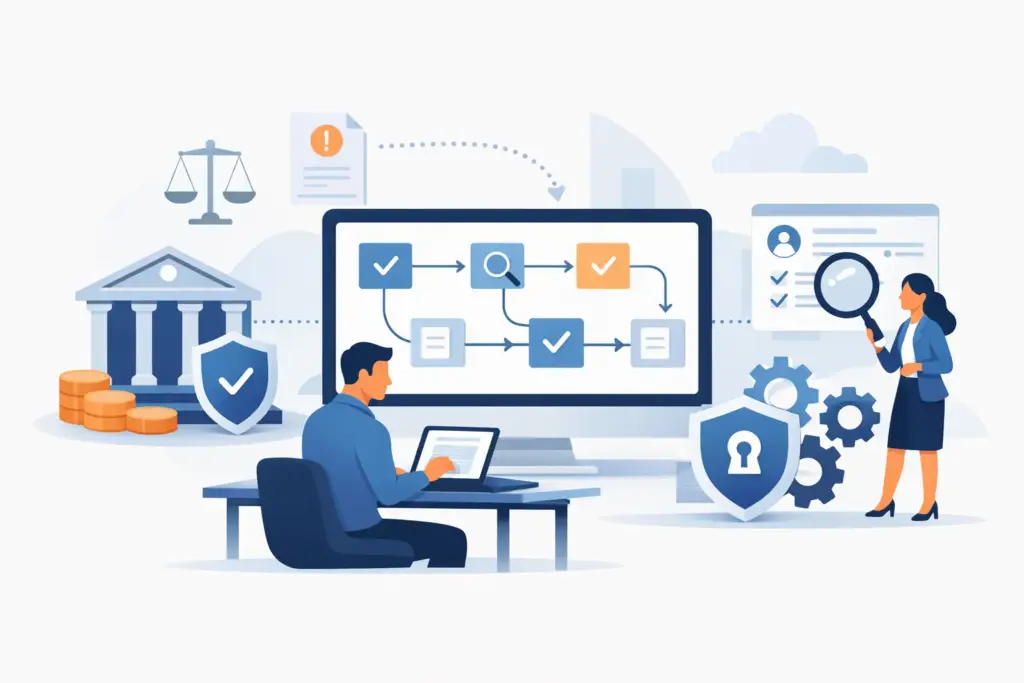
In financial services, regulatory intelligence is the process of collecting, analyzing, and applying regulatory information so firms can make informed decisions about obligations, risk, and operational change. It is not just monitoring new rules. It is understanding what those rules mean for a specific business model, legal entity, product set, control framework, and geography.
At its best, regulatory intelligence turns fragmented regulatory activity into usable institutional insight. That means cited answers to live questions, comparative analysis across jurisdictions, visibility into supervisory expectations, and a clear line from source material to business action. For compliance leaders, legal teams, and risk functions, that difference is material.
What is regulatory intelligence in practice?
A narrow definition would say regulatory intelligence is the tracking of laws, rules, consultations, guidance, enforcement actions, and supervisory communications. That is true, but incomplete.
In practice, regulatory intelligence sits between raw regulatory content and operational decision-making. It helps a firm answer questions such as whether a new circular changes customer due diligence requirements, whether an existing policy remains aligned with supervisory expectations, or whether sanctions screening logic should be updated after a fresh designation. The point is not simply to know that something changed. The point is to know whether the change matters, where it matters, and what should happen next.
This is why experienced teams treat regulatory intelligence as an operating capability, not a news feed. A document repository may tell you that a regulator published an update. Intelligence tells you whether the update affects onboarding controls in Singapore, marketing approvals in the UK, or correspondent banking risk in the UAE.
Why manual regulatory monitoring breaks down
Most firms did not design their compliance architecture for the current volume and speed of regulatory change. They built around subject matter expertise, legal memos, email alerts, spreadsheets, and the institutional memory of a few senior people. That model still has value, but it does not scale well.
The main problem is not effort alone. It is fragmentation. Financial institutions operate across rulebooks, regulators, languages, and legal concepts that do not map neatly onto one another. A single compliance question can require checking primary legislation, regulator guidance, FAQs, enforcement outcomes, and industry-specific expectations. By the time a team has assembled the relevant sources, the business has already asked for an answer.
Manual research also creates consistency risk. Two capable professionals can review the same question and return different conclusions if they search different sources, apply different assumptions, or miss non-obvious supervisory signals. When the issue later reaches internal audit, a regulator, or external counsel, defensibility matters as much as speed.
That is where regulatory intelligence earns its value. It reduces search friction, improves source coverage, and creates a more structured basis for interpretation. It does not remove judgment. It gives judgment better inputs.
The core components of regulatory intelligence
Strong regulatory intelligence usually has four layers.
The first is source capture. Firms need access to the right material across relevant jurisdictions, including rules, consultations, guidance, speeches, enforcement actions, and sanctions developments. Weak source coverage leads to false confidence.
The second is normalization. Regulatory content is messy. Different authorities use different terms, publication formats, and legal hierarchies. Intelligence requires organizing that content in a way practitioners can actually interrogate.
The third is analysis. This is where raw information becomes useful. Analysis may involve identifying obligations, comparing regimes, highlighting deltas from existing policy, or assessing whether a change is immediately actionable or still at consultation stage.
The fourth is application. Intelligence only matters if it feeds a decision or workflow. That might mean updating a policy, briefing senior management, launching a control review, tuning a sanctions screening process, or documenting a compliance rationale.
Many organizations are better at the first layer than the last three. They have plenty of alerts but not enough clarity.
What regulatory intelligence is not
It is easy to overstate the term. Regulatory intelligence is not the same as horizon scanning alone, and it is not equivalent to legal advice.
Horizon scanning tells you what may be changing. Regulatory intelligence goes further by helping you assess impact and relevance. Legal advice, by contrast, applies formal legal judgment to a specific fact pattern, often with accountability attached. Intelligence can support that process, accelerate it, and make it more consistent, but it does not replace qualified legal assessment where the issue is complex, contested, or high exposure.
It is also not just a technology category. Software can dramatically improve the speed and scope of regulatory intelligence, especially in cross-border environments, but the capability still depends on governance, subject matter expertise, and clear downstream ownership.
Why it matters more in financial services
All regulated sectors deal with compliance burden, but financial services faces a particularly demanding mix of complexity, pace, and enforcement sensitivity. Firms must interpret not only formal rules but also supervisory expectations around governance, financial crime, outsourcing, operational resilience, conduct, prudential standards, and customer outcomes.
Cross-border exposure makes this harder. The same control issue can trigger different expectations in the US, UK, EU, Hong Kong, or Singapore. Sanctions risk adds another layer because screening obligations can shift rapidly and enforcement consequences are immediate. In that environment, outdated or incomplete regulatory intelligence is not just inefficient. It can create real exposure.
There is also a governance dimension. Boards, risk committees, and senior managers increasingly expect concise, evidence-based views on regulatory change. They do not want a stack of alerts. They want a position: what changed, what it affects, what the gap is, and what the institution should do.
How firms use regulatory intelligence
The most mature teams use regulatory intelligence in several ways at once. Compliance teams use it to answer live questions from the business and to support regulatory change management. Legal teams use it to speed issue spotting and compare jurisdictional approaches before escalating nuanced points. Risk and internal audit teams use it to benchmark controls and test whether policies still reflect current expectations.
There is also a practical use case in policy governance. A firm may have a global AML policy with local addenda across multiple jurisdictions. Regulatory intelligence helps identify where the global standard is sufficient, where local enhancement is required, and where wording needs to change to reflect new guidance or enforcement themes.
Sanctions is another area where intelligence must be current and operational. It is not enough to know that a designation occurred. Firms need to understand the source list, the legal effect, the affected parties, and the downstream implications for screening, escalation, and reporting.
What good regulatory intelligence looks like
Useful intelligence is fast, but speed alone is not enough. It should also be source-backed, jurisdiction-specific, and relevant to how regulated firms actually work.
That means practitioners should be able to trace an answer back to the underlying authority. It means cross-jurisdiction comparison should show meaningful differences rather than flatten them into generic commentary. It also means outputs should support workflows people already own, such as policy reviews, control assessments, committee papers, and remediation planning.
This is where specialist platforms have an advantage over general-purpose research tools. In highly regulated sectors, the issue is rarely finding words on a page. It is identifying the right regulatory source, understanding its weight, comparing it with adjacent guidance, and extracting the operational consequence. A purpose-built platform such as Sherlocq is designed around that problem: cited regulatory answers, analysis against regulatory standards, and sanctions intelligence that can be used by financial services teams under real time pressure.
The trade-off firms need to manage
Better regulatory intelligence does not eliminate ambiguity. Some regulatory questions remain judgment calls, especially when authorities use principles-based language or when markets diverge on supervisory tone. Firms still need escalation paths, legal review, and documented decision-making.
The trade-off is not between technology and expertise. It is between spending expert time on search versus spending expert time on analysis. The stronger the intelligence layer, the more senior teams can focus on interpretation, materiality, and action.
That shift matters because compliance resources are finite. When highly paid specialists spend hours compiling source documents, the institution is paying for manual retrieval instead of informed judgment. In a high-change environment, that is not a minor inefficiency. It is a structural weakness.
Regulatory intelligence is ultimately about decision quality under pressure. The firms that treat it as core infrastructure tend to move faster, document better, and respond with more confidence when regulators, auditors, and senior stakeholders ask hard questions. If your team is still stitching together answers from alerts, inboxes, and old memos, the issue is no longer access to information. It is whether you have built a credible way to turn information into action.