Best Tools for Regulatory Impact Assessment
A regulatory update becomes an enforcement exposure long before it reaches a board report. The critical question is not whether a firm can receive the update. It is whether it can determine, quickly and defensibly, which legal entities, products, customers, policies, controls, and systems are affected. The best tools for regulatory impact assessment turn that question into a repeatable operating process rather than an urgent manual exercise.
For financial institutions, the right answer is rarely a single platform. Regulatory impact assessment spans research, interpretation, obligation mapping, control testing, ownership, and evidence retention. A tool may be excellent at one stage and weak at another. Selection should begin with the failure point in the current process, not a generic feature checklist.
Regulatory impact assessment is more than change tracking
A regulatory feed tells a team that a rule, consultation, supervisory statement, or enforcement trend exists. An impact assessment establishes what it means for the institution. That distinction matters when a change applies differently across a US broker-dealer, a UK payment institution, an EU investment firm, and an offshore affiliate serving the same customer base.
A defensible assessment answers five operational questions: What changed? Which requirements are binding, proposed, or supervisory expectations? Where does the change apply? Which business activities and controls are affected? Who owns remediation, and what evidence supports the decision?
Manual research usually breaks down at the second and third questions. Teams search across regulator websites, legal updates, internal policies, and prior assessments. They may reach a plausible conclusion, but struggle to show the source trail, compare jurisdictions, or prove that a relevant obligation was not overlooked. The result is inconsistent triage, duplicate legal work, and a weak audit record.
Best tools for regulatory impact assessment by use case
No product category solves every stage equally well. The strongest programs combine specialist regulatory intelligence with systems that govern implementation and assurance.
1. Specialized regulatory intelligence platforms
Specialized regulatory intelligence tools are best when the central constraint is speed and quality of legal analysis. They enable compliance and legal teams to ask focused questions, identify relevant primary and supervisory materials, compare obligations across jurisdictions, and preserve the cited basis for an assessment.
Sherlocq is designed for this use case in financial services. Its regulatory research and analysis capabilities help teams investigate requirements across more than 30 jurisdictions, assess policies and procedures against regulatory standards, and produce source-backed outputs for internal stakeholders. This model is particularly useful where the impact depends on nuanced distinctions between AML rules, licensing obligations, conduct expectations, or enforcement priorities.
The trade-off is that intelligence platforms do not replace enterprise workflow design. Once an assessment identifies a control gap, many institutions still need a system of record for issue ownership, testing, approvals, and remediation evidence.
2. Regulatory change management platforms
Regulatory change management products are built to ingest external developments, classify them, route them to relevant teams, and track assessment completion. They are most valuable for institutions receiving a high volume of updates across multiple regulators and business lines.
Platforms such as CUBE can be a fit where automated regulatory monitoring and workflow orchestration are the immediate priorities. The key diligence question is not simply how many sources a vendor monitors. It is how well the platform can map a development to the firm’s actual legal entities, permissions, products, and operating model without producing unmanageable false positives.
These tools require disciplined taxonomy management. If the organization’s business inventory, obligation library, and ownership structure are outdated, automation will distribute noise more efficiently. Before implementation, establish who owns regulatory classifications and how exceptions are resolved.
3. Integrated risk and GRC platforms
GRC platforms such as ServiceNow Integrated Risk Management, Archer, and MetricStream are strongest after the regulatory interpretation is complete. They provide the operating framework for assigning impact assessments, linking requirements to risks and controls, documenting approvals, escalating overdue actions, and reporting to senior management.
For large institutions, this is often the backbone of the control environment. A regulatory development can be connected to a policy review, a control redesign, a testing plan, an issue record, and management attestations. Internal audit benefits because the record shows not only the conclusion but also the governance around it.
The limitation is analytical depth. GRC platforms generally depend on users or integrated content providers to supply the underlying regulatory interpretation. They can make a process controlled and visible, but they do not by themselves resolve difficult questions of applicability or cross-border legal meaning.
4. Legal and regulatory content databases
Established legal research and regulatory intelligence databases remain useful for primary materials, historical rules, regulatory alerts, and legal commentary. They are often appropriate for complex, high-stakes matters that require broad legal context beyond a structured compliance workflow.
Their value is strongest when legal teams need to validate an interpretation, examine legislative history, or research a narrow question in depth. They can also be an important secondary source for quality assurance.
However, conventional databases can create a labor-intensive experience for operational compliance teams. Search results may be broad, jurisdictional comparisons may require manual synthesis, and the connection between external law and internal controls may sit outside the tool. They work best alongside, rather than instead of, a defined impact assessment process.
5. Policy and control mapping tools
Where the primary issue is implementation, policy management and control-mapping capabilities deserve equal weight. A firm must be able to translate a regulatory requirement into a specific internal obligation, identify the relevant policy language, locate the control owner, and determine whether evidence of operation exists.
Some GRC suites offer this natively. Others rely on dedicated policy management tools, document repositories, or structured spreadsheets. The technology matters, but the mapping model matters more. A requirement should not be linked vaguely to an enterprise policy. It should be tied to the relevant section, control objective, procedure, evidence source, and accountable owner.
This is where many assessments lose defensibility. A statement that a policy is “aligned” is not a conclusion. It is a claim that should be testable against the specific regulatory expectation.
Build a stack around decisions, not documents
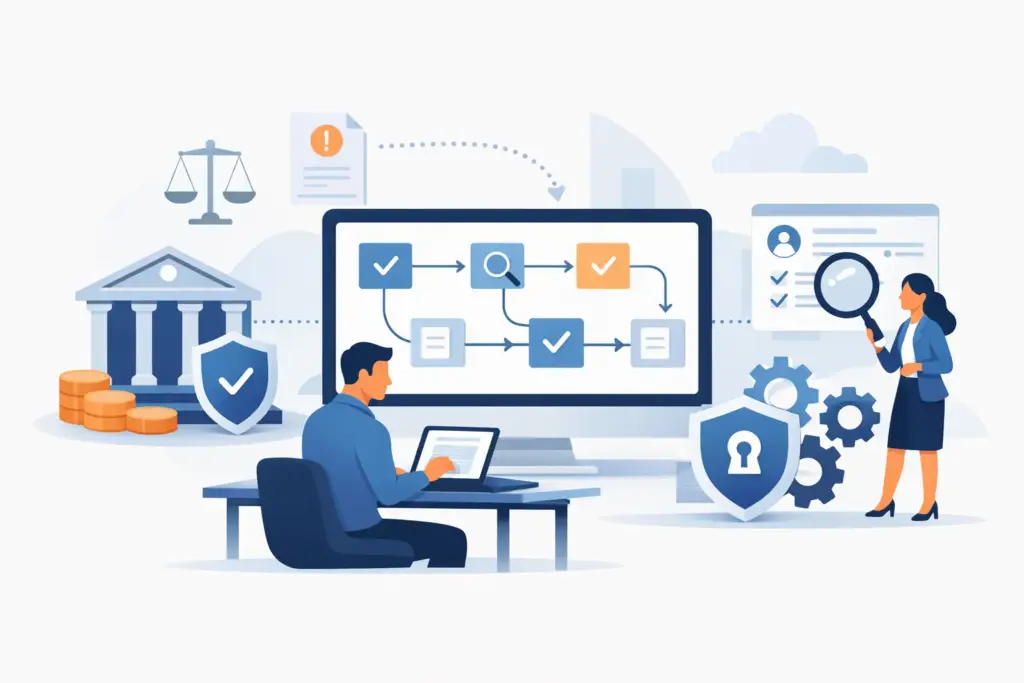
A high-performing regulatory impact assessment workflow has a clear handoff between intelligence and execution. First, a team identifies and triages the change based on jurisdiction, regulatory status, effective date, and business relevance. Next, subject matter experts determine applicability and document the rationale with authoritative sources. Then the firm maps affected obligations to policies, controls, systems, training, and third parties.
The final stage is governance. Material gaps should create owned remediation actions with target dates, approval thresholds, testing requirements, and escalation rules. Closed actions should retain the original regulatory text, analysis, decision history, supporting evidence, and validation result. Without that record, the firm may be able to say it acted, but not demonstrate why its response was reasonable.
For multinational organizations, maintain separate fields for the regulator, jurisdiction, legal entity, business line, and regulatory status. Treating “Europe” or “APAC” as a single assessment category is rarely adequate. Local implementation dates, supervisory expectations, and scope thresholds can materially change the required response.
What to test before selecting a platform
A vendor demonstration should test the real pressure points in your environment. Use a recently issued rule or enforcement action that affected several teams. Ask the vendor to identify the authoritative source, distinguish binding requirements from guidance, compare relevant jurisdictions, and show how the conclusion would be retained and reviewed.
Assess the tool against four practical criteria:
- Source authority and traceability: Can users reach the underlying legal, regulatory, or supervisory source behind a conclusion?
- Financial services relevance: Does the content and taxonomy reflect the obligations that drive your program, including AML, sanctions, conduct, prudential, payments, and crypto where relevant?
- Entity-level applicability: Can the platform differentiate obligations by jurisdiction, permission, product, customer type, and legal entity?
- Workflow and integration fit: Can findings move into the organization’s GRC, policy, case management, or reporting environment with an adequate audit trail?
Security and governance are also selection criteria, not procurement formalities. Review access controls, data handling, retention, model governance, audit logging, and the ability to separate confidential internal content from external research. If AI is part of the product, require clarity on source citation, human review, and the limits of automated conclusions.
The best tool is the one that makes the next regulatory decision faster without making it less accountable. In a supervisory review, speed is valuable. A clear rationale, linked to evidence and owned through remediation, is what makes that speed defensible.